
Addiction is a problem that surrounds our world today. When was the last time you watched the news and didn’t see them report a crime that was fueled by drugs or alcohol?
While addiction takes many forms, without a doubt, alcohol addiction is one of the most prevalent types. What few people realize, though, is the extensive history of alcoholism and how it has played a role in history.
When Alcohol First Began

Neither alcohol nor alcoholism is new to our modern world or to mankind. In truth, this isn’t surprising. Fermenting fruits and grains is a rather simple, natural process, so it makes sense that it was an easy discovery for people to make.
Historians have discovered evidence of alcoholic drinks throughout countless civilizations from history, but the earliest known sample was from around 7000 BC. This drink was in China, and it’s the earliest sample to be chemically confirmed as alcohol. It was made primarily of fermented grapes, along with several other ingredients.
Alcohol’s Impact on History
The earliest alcoholic drink may have been from 9000 years ago, but since then alcohol has developed a stronghold in societies around the world. The famous and powerful have not been spared from its impact. Many influential people from history have suffered from alcoholism and even died from its effects.
Vincent Van Gogh
Without a doubt, Van Gogh was a brilliant artist who is now revered for his talent and his vision into the world. In his time, on the other hand, his world was far bleaker.
Van Gogh was an alcoholic who primarily drank absinthe, so he suffered the ill effects of hallucinations on top of his alcoholism. Unfortunately, he took his own life at the young age of 37. The world can only wonder how much of a role his alcoholism played and how much more we could have enjoyed him otherwise.
Richard Nixon
Few people have as much of an effect on history as a US president. Known as the most powerful person in the free world at any given time, an American president can do a lot of harm if alcoholism is clouding the judgment. One of the most notorious past presidents suffered from severe alcoholism during his presidency. It was well-known among his staff that Nixon would repeatedly spend his evenings being extremely drunk.
The world is fortunate to have that staff around because there are several stories of times when Nixon’s drinking would have put the world at serious risk if others hadn’t intervened.
In one story, Nixon reportedly offered a White House job to an unknown woman when he was drunk at a restaurant. More shockingly, Nixon allegedly tried to convince Henry Kissinger that the US should drop a nuclear bomb on Vietnam one night. Obviously, this would have had devastating consequences for Vietnam and the world as a whole.
David Hasselhoff
He may not have as much sway in world history as Richard Nixon. However, David Hasselhoff’s story is one that shows how far a person can fall as the result of alcoholism. In his heyday, Hasselhoff was an American icon. He was the man so many others wanted to be.
Over the years, though, alcohol took its toll. Everything came to a head in 2007 when Hasselhoff’s daughter filmed one of his many drunken evenings. The video went viral, and it brought the ugly face of alcoholism to the surface. It reminded the world that alcoholism can reduce even the most glamorous of celebrities to people with no control over their actions.
The Beginning of Healing
While alcoholism has had a strong grip on human society, there are plenty of people throughout history who have played a part in helping others break free. There is evidence of Native American societies having “sobriety circles” as early as 1750. These circles were much like today’s support groups: people gathering together to support each other in their sobriety.
Today’s style of rehabilitation began to take shape formally in 1935 when Alcoholics Anonymous was founded. Since then, the organization has grown throughout the US, along with the many rehabilitation centers that have emerged to help people address their alcoholism.
Ending the Stigma
While we have an ongoing effort to help individuals treat their alcoholism, our society is also waging war on the stigma of alcoholism. In the past, some people believed alcoholism was a sign of weakness or a bad decision. That stigma prevented countless people from seeking the help they needed.
In 1956, the American Medical Association took a powerful step by officially recognizing alcoholism as a disease. This started the ball rolling toward a wider understanding that alcoholism is just as much of an illness as diabetes or cancer. While the battle is ongoing, that recognition continues to spread today.
How Alcohol Impacts Us Today
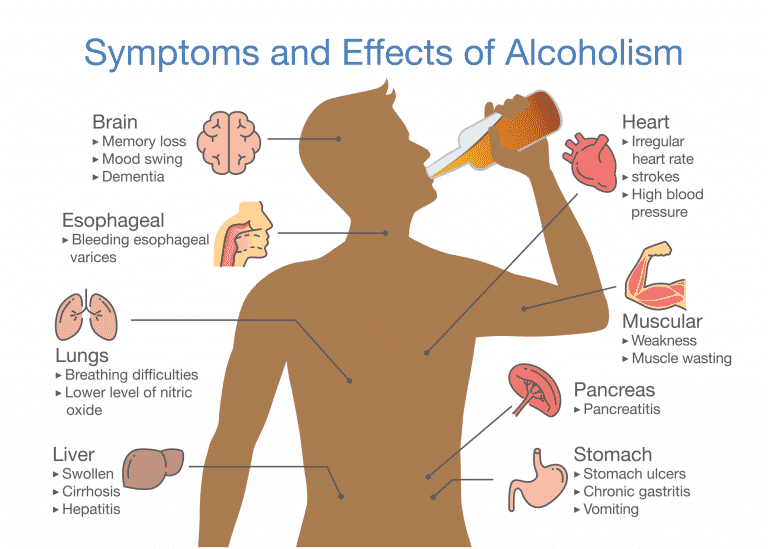
Despite the fact that the world is wising up to alcoholism and the damage it does, we still have a long way to go. In the US alone, 88,000 people each year die from alcohol-related causes. Every single one of those 88,000 people had the potential to make the world a better place in some way.
These losses don’t include the many people around the world who also have amazing potential but cannot reach their potential because alcohol holds them back. Unfortunately, the world will never know all the treasures and opportunities we’ve lost due to alcohol.
Fighting Back Against the History of Alcoholism
Without a doubt, alcohol has played a powerful role in human history. The wonderful thing about time, though, is that it keeps rolling on. It’s never too late to make tomorrow better by loosening alcohol’s grip the world and taking action against the history of alcoholism.
There’s no better way to begin than to start with yourself or a loved one who struggles with alcoholism. For help, call our recovery center today.